
A winning formula for business agility
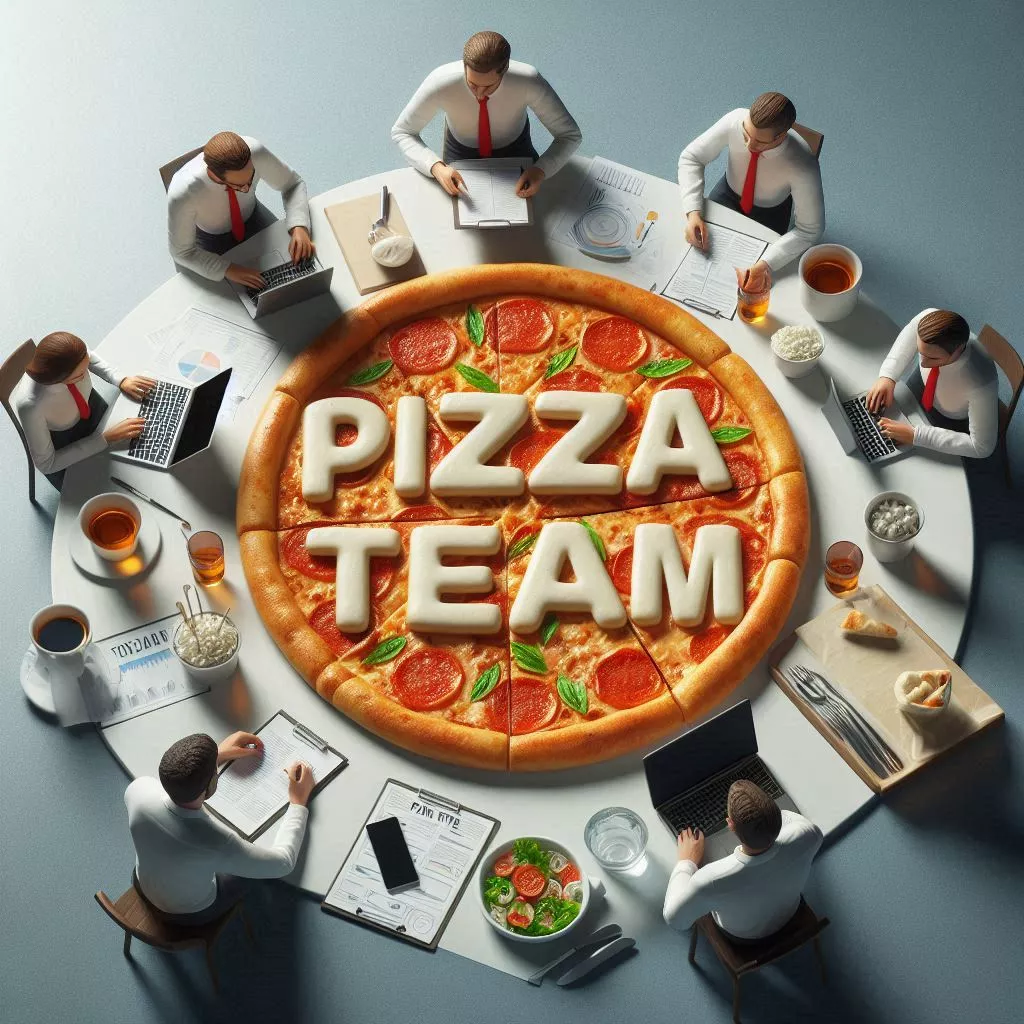
In the world of agility, some simple ideas have a huge impact. This is the case with the Pizza Team concept, a principle introduced at Amazon in its early years by its founder, Jeff Bezos. But what does this tasty metaphor really mean?
What is a Pizza Team?
- A clear and shared goal:
Each member must be aligned with a common goal for which the team is fully responsible. Without this alignment, the small size of the team will have no effect on its effectiveness. - Diverse skills:
- Direct access to customers:
- Total autonomy:
The concept of the Pizza Team, also known as the "Two Pizza Teams" rule, is based on a simple idea: a team should be small enough to be fed with two pizzas. This principle aims to optimize team size to maximize efficiency, creativity, and autonomy.
According to Jeff Bezos, smaller teams promote smoother communication, better cohesion, and faster decision-making. But beware, behind this apparent simplicity lies a methodology designed to support innovation and agility.
The benefits of small teams
Why choose small teams? Here are some fundamental reasons:
-
a) More time for innovation
Smaller teams require less administration, leaving more time to focus on what matters most: creating value for customers.
-
b) Avoid the Ringelmann effect
The Ringelmann effect refers to the decrease in individual productivity in large groups. With smaller teams, each member plays a key role and feels valued.
-
c) Agility and speed
Being small allows you to run tests, learn quickly, and adapt based on feedback. This reduces the cost of mistakes and speeds up innovation cycles.
-
d) Promote autonomy
Well-designed agile teams have all the skills they need to achieve their goals without relying excessively on other teams or external decisions.
The conditions necessary for a successful Pizza Team
Although size is a key factor, other criteria must be met in order to fully exploit the potential of Pizza Teams:
Teams must be cross-functional, combining a variety of skills to meet their objectives: analysis, design, development, marketing, etc.
Pizza Teams must have direct contact with their end users to gather feedback and quickly adjust their priorities.
A team cannot be agile if it constantly depends on other entities. It must have the resources and decision-making power necessary to move forward on its own.
Pizza Teams at the service of innovation
At Amazon, this organizational model has fostered the creation of microservices and a DevOps approach. Each team acts as an independent unit, capable of developing, testing, and deploying features autonomously. This allows them to respond quickly to market changes while making continuous improvements based on customer feedback.
Pizza Teams don't just execute: they innovate. By accepting failure as a necessary step, they experiment with bold new ideas and learn from their mistakes to better meet customer needs.
The limits of the Two Pizza Teams rule
While the principle of small teams seems universal, it is not suitable for all organizations or situations.
For example:
Some structures require frequent interactions between multiple teams, which can slow down processes.
Excessive autonomy can lead to a lack of overall coordination.
To take full advantage of this model, it is important to think about the structure of teams and ensure that they fit seamlessly into the overall architecture of the company.
Conclusion
The "Two Pizza Teams" embody much more than just a simple size rule: they symbolize a work philosophy that prioritizes agility, accountability, and innovation. Inspired by this concept, every organization can consider how to adopt similar structures, promoting autonomous teams focused on creating value.
At Amazon, these teams have become a cornerstone of the corporate culture, proving that with two pizzas and a lot of vision, it is possible to build an organization that is both agile and innovative.


Who is Byron?